
The Pitfalls of Using AI for Standardized Test Prep (3 Costly Mistakes to Avoid)

Students are increasingly using AI for standardized test prep. On the surface, that's a good thing. AI is a powerful tool, and it can help you learn some of the concepts tested on exams like the GMAT, GRE, and Executive Assessment, inexpensively.
However, what a lot of students aren't aware of are the mistakes AI still makes when it comes to the nuances of standardized tests. There are several key AI pitfalls that may be quietly undermining your ability to get the highest possible score.
In the video below, I drill deep into three key ways that AI may be jeopardizing your ability to maximize your performance on test day.
We're living in an incredible time, with access to more information at our fingertips than ever before in human history.
AI is accelerating that.
In many ways, AI can be a useful tool to augment your preparation for the GMAT, GRE, Executive Assessment, or SAT/ACT, if used correctly.
However, an over-reliance on AI for standardized test prep, including potentially using it as your only source of instruction for the exam, is not only setting you up to study the wrong things and solve certain questions in a less-than-efficient way, but you're also leaving a lot on the table in terms of learning how to get right answers in non-traditional ways and developing the tools that will enable you to adapt to whatever questions the test makers throw at you.
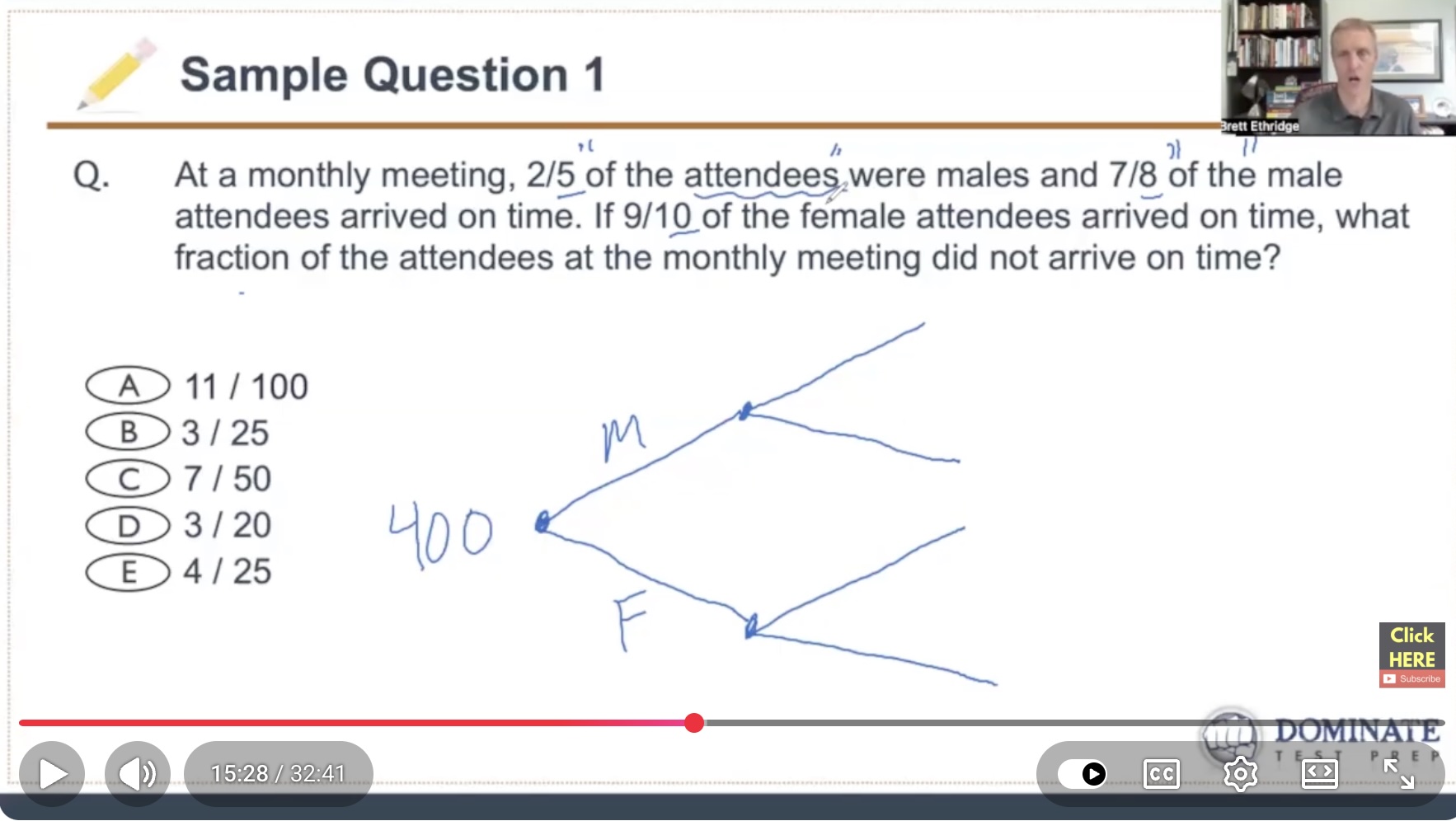
This video includes two detailed examples where I illustrate the exact AI limitations that I'm talking about.
If you're preparing for the GMAT, GRE, Executive Assessment, or SAT/ACT, I want you to maximize your score so that you can reach your goals. If you internalize the things that I'm pointing out in the video, I'm confident that you will.